Sing Me a Fable
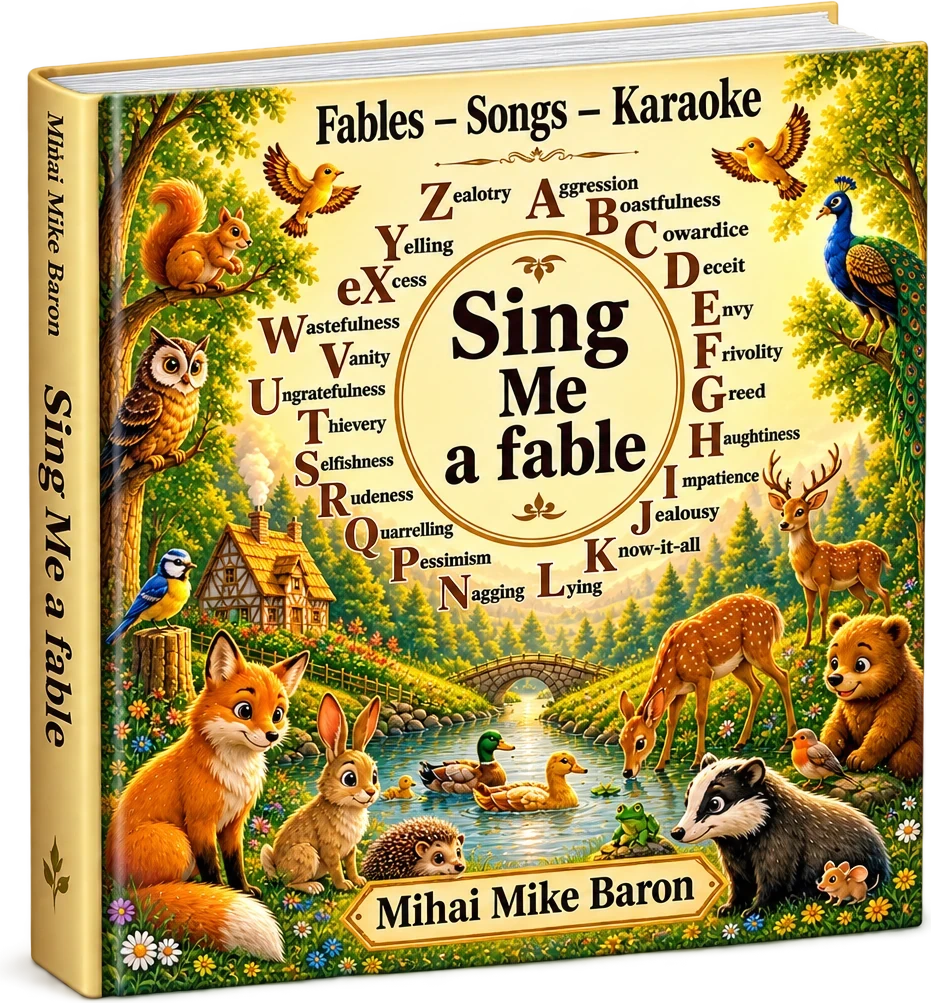
Twenty-six fables in rhyme — one for every letter, and every little flaw a child can grow out of.
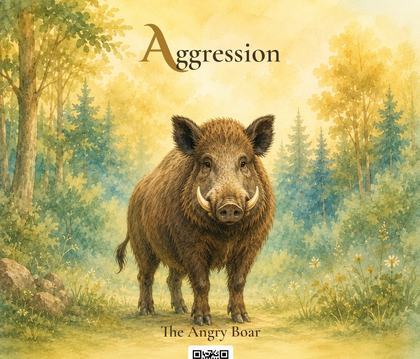
The Angry Boar is free to sing — no QR code needed. The rest open with the QR codes printed in the book.
Colours
Meadow
© 2026 Mihai Mike Baron · build 2026-09-02_H
Sing along with the words as they light up.
The sing-along is still on its way
This one isn't ready yet. The song is free in the meantime — press the button below.
Free for everyone. Sing-along opens with the QR codes printed in the book.
Twenty-six fables, one for each letter and each little flaw, written in rhyme by Mihai Mike Baron. Every fable has a song. Scan the QR code on a fable's first page and the words light up so a child can sing it back.
Nothing here asks for a name, an email or an account. Progress stays on the device.

Mihai Mike Baron
Canadian-Romanian writer, living between Montreal, Florida and Romania.
Ten games, in the order a child grows into them. The first three need no reading at all. Nothing is timed, nothing is scored against another child, and nothing is saved anywhere but on this device. Tap one to play.
Ages 3–5 · no reading
Ages 3–6 · no reading
Ages 6–8 · early reading
Ages 7–10 · reading
Ages 4–8 · no reading needed
Ages 6–10 · reading
Ages 6–10 · drag and drop
Words that hurt
Words that help
Ages 7–10 · reading
Ages 4–8 · counting to 13, no reading needed
Join the dots from 1 to 13. Who is hiding?
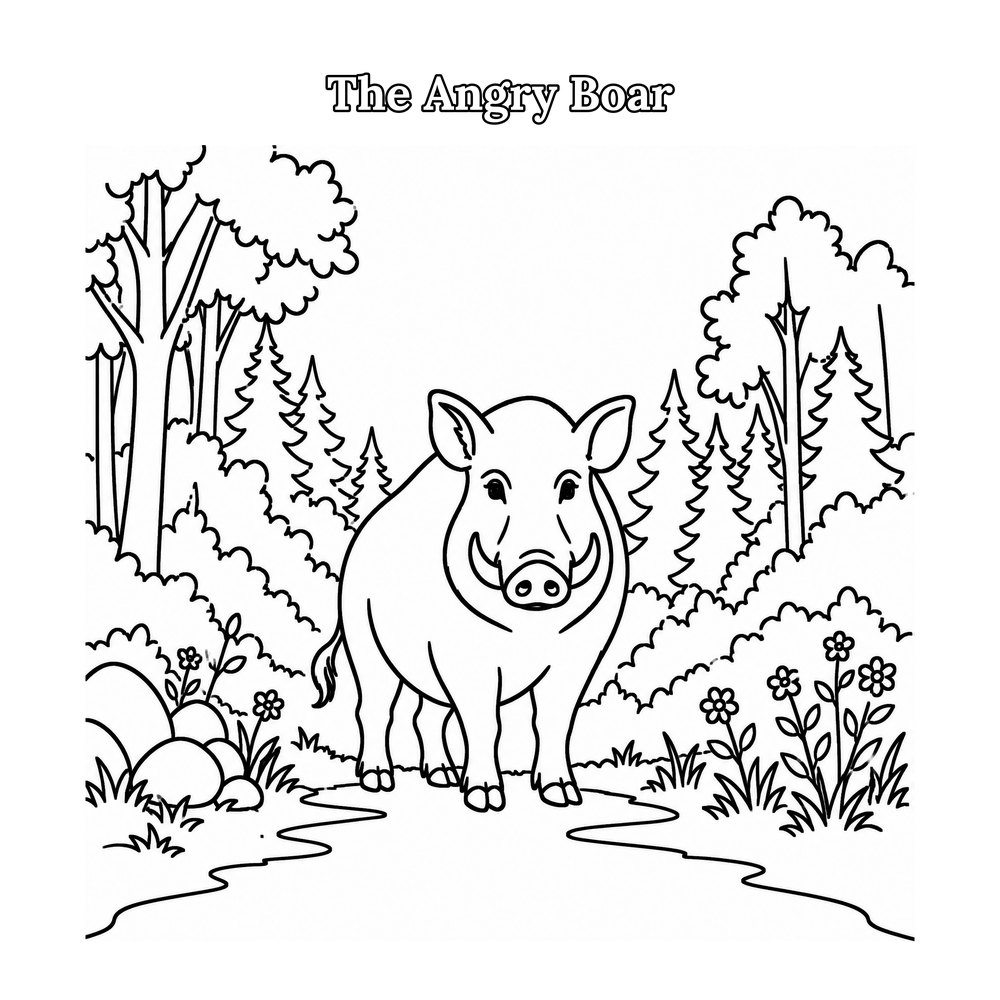
Start at dot 1
Ages 4–10 · away from the screen
A real deck of fifty-four cards — the twenty-six animals, each twice, with the flaw it is famous for and the virtue that answers it, printed large enough to hold in a small hand.
Go Fish. “Do you have the Boar?” Ask for animals instead of numbers, and when you lay a pair down you say its flaw out loud. Nothing to draw from is called the pond, so a miss is “sing to the pond”. The youngest at the table can play it without knowing a single letter.
Name the Flaw. Snap, but on the numbers: turn cards into the middle and when two share a rank the first to slap it must say the flaw out loud. Say the virtue as well and you take one card more. It gets the vocabulary of the whole book into a child’s mouth in about ten minutes.
The Alphabet Race. War, with the alphabet deciding instead of the rank: the animal whose letter is nearer to Z takes the pair, so the Zebra beats the Boar. Children learn the order of the alphabet by winning with it.
Twelve games come with the deck — all of them, with the rules in full, are on the card games page.
This is not an alphabet book that happens to have animals in it. It is an alphabet of character — one small flaw for every letter, one virtue that answers it, and four different ways for a child to take it in.
What this package is for
Every child arrives with the same twenty-six habits waiting to be shaped: the shouting, the boasting, the not sharing, the not waiting. You cannot argue a four-year-old out of any of them.
But you can sing her the story of a swan who bragged until the lake went quiet. That is what this package does. Each flaw is given an animal, a story, a song and a picture — and then, quietly, the virtue that answers it.
Nothing here lectures. The moral is two rhyming lines a four-year-old repeats without being asked, and by the time she can repeat it she has already understood it.
The alphabet of character
Twenty-six flaws, and the twenty-six virtues that answer them. The flaws are what the fables are about; the virtues are printed on the cards, so the child holds the remedy in her hand rather than reading it off a chart.
This is the spine of the whole package. Every song, every colouring page, every game and every card comes back to one of these twenty-six pairs. See all twenty-six fables →
What you have
The storybook — Sing Me a Fable. Twenty-six fables in rhyme, six painted pages each: the animal alone, four verses, and a moral. The flaw is named on the first page in gold, so a child learns the word and the picture together.
The card deck — 54 cards. A real playing deck. Every face carries the fable letter, the flaw, and the virtue that answers it, plus a code that opens that fable’s song. Character practice disguised as Go Fish. See the deck →
The colouring book — Color Me a Fable. Not in the box: yours to download and print at home, using the last two words printed on the back cover of your storybook — a page, a fable, or all 156 pictures, as many times as you like. It is not on sale separately and it is not free: only people who bought the package can open it.
What is free, and what is yours
Free to everyone, forever. All twenty-six songs. Ten games. Twelve kindergarten activities. Twenty-six poster pages to print and colour. One complete colouring fable. Two arcade games. One complete sing-along — The Angry Boar. No account, no e-mail, no subscription.
Yours because you bought the package. The other twenty-five sing-alongs, opened by the codes printed beside each fable in your storybook — and the other twenty-four arcade games together with the whole of Color Me a Fable, all 156 pictures, opened by the last two words on your back cover.
Both of those keys are printed, and printed only in the book you bought. They are not sold separately, not e-mailed, and not recoverable from an order number.
The first ten minutes
1. Open singmeafable.com on any phone or tablet. No account,
no e-mail, no password. Let a child tap the wheel of animals and press play.
2. Point a phone camera at the small square code under any fable’s title and the
sing-along opens, the words lighting up in time with the music. Those codes exist only in the
printed book.
3. Turn the storybook over and read the last line on the back cover.
Its final two words open your colouring book.
Your colouring book
Go to color.singmeafable.com, type the last two words printed on the back cover of your storybook, and the whole of Color Me a Fable opens — not a sample, all twenty-six fables. Without the word the address opens nothing.
Print a single page, one fable’s six pages, or the entire book. As many times as you like. A spilled glass of paint, a page torn in half, two children who both want the fox — none of it costs anything. Print it again.
Why colouring is where character starts. A child too young to read spends twenty minutes inside a picture of the boar who charged before he looked, and comes out knowing what the story was about. She has met the flaw before she can name it.
The website, button by button
Fables — the wheel of twenty-six animals. A child who cannot read yet taps the
boar, not the word Aggression.
Songs — all twenty-six, free to everyone, no code needed. A moral sung is a moral
remembered.
Karaoke — the sing-along. Twenty-five open with the code printed beside that fable
in your storybook; The Angry Boar is free so you can see how it works first.
Games — ten of them, each drilling a different piece of character. Nothing is timed
and nothing is scored against another child.
Arcade — quicker games, one per fable, for the minutes between things. All
twenty-six are built; two are free and the rest open with your two words.
Cards — the deck and its twelve games. Name the Flaw and Find the
Virtue are character games outright.
Colour & Draw — one whole fable free for anyone; the rest open with your word.
Kindergarten Play — twelve activities for a room of children, several with no
screen at all.
How character builds, age by age
Too young to read — she meets the flaw. She colours the boar mid-charge and the swan mid-boast. Nobody explains anything. The song plays while she works, and the picture does the remembering for her.
Learning to read — she names it. The rhymes hand her words a reading primer never does: boastful, ungrateful, quarrelsome, wasteful. Each arrives attached to an animal she has already coloured, so the word has a face before it has a definition. This is the step most character teaching skips, and it is the one that lasts.
Reading well — she judges it. She finishes the moral’s rhyme before the screen does, decides which words hurt and which help, and plays a card game where naming the flaw is how you win. Now she is not being told what is right; she is working it out and saying it aloud.
One package, three stages, and twenty-six words for behaviour that most children never get given at all.
For the grown-up
Three things make this work, and none of them is the screen.
Name the flaw out loud. When the hyena mocks, say the word: that is meanness. Children cannot manage a feeling they have no name for, and twenty-six names is a large vocabulary for a five-year-old.
Ask before you tell. Show the painting with your thumb over the title and ask what this animal is like. A guessed answer sticks; a given one does not.
Let the virtue be hers. The cards print the remedy under the flaw so the child holds it rather than hears it. When she names a virtue in someone else — a brother who shared, a friend who waited — that is the whole thing working.
If something will not work
The same animals, drawn in clean black outlines with plenty of white to fill in. Print a page, hand out the crayons, and let a child colour the boar while his song plays.
One fable, free to everyone. The Angry Boar’s six pages, ready to print.
⇩ Download the free fable — 6 pages
PDF · print at home, A4 or Letter
Twenty-six posters, free to everyone. The big letter and the animal from every fable, A to Z, ready to print.
The whole book, for readers of the book. All twenty-six fables — one colouring page for every illustration — live at color.singmeafable.com. It opens with the last two words printed on the back cover of your storybook. There you can print a page, a fable, or the whole book at home — as many times as you like, so a spilled glass of paint costs nothing.
1. Go to color.singmeafable.com
2. Type the last two words on the back cover of your book
3. Print a page, a fable, or the whole book at home
Why colouring first. A child too young to read spends twenty minutes inside the picture and comes out knowing what the fable is about. That is the first step of the journey, before the words and long before the singing.
Twenty-six fables in rhyme, one for every letter and every small flaw a child grows out of.
Each fable runs six painted pages: the animal alone on its title page, four verses, and a moral at the end. A is the Angry Boar who charges before he looks; H is the Show-Off Pufferfish who puffs until nowhere is left to hide; Z is the My-Way Zebra who will not bend.
On this site every fable has its own page, reached by tapping its animal on the wheel. There you can play its song, and open its sing-along if you have the book.
The words light up in time with the music, on the same painted page the child is holding.
How it works. Each fable's first page carries a printed code. Scan it with a phone and that fable's sing-along opens — the verse appearing line by line as it is sung, so a child who cannot read yet follows the highlight and sings anyway.
What you need. The book. The songs themselves are free to everyone, here on the site; the sing-along is what the printed code opens.
Try it now, free. The Angry Boar's sing-along is open to everyone, with no code.
No phone to hand? The last two words on the back cover of the book open every sing-along on this device — the same two words that open the arcade and the colouring book.
Quick games, for the minutes between things.
The faster games — the ones a child plays standing up, waiting for dinner, with one thumb. All twenty-six are built, one for every fable, and each plays in about two minutes.
The Angry Boar and The Boy Who Cried Wolf are free to play. The rest open with the last two words on the back cover of Sing Me a Fable — the same two words that open the colouring book.
Twelve activities built on the twenty-six fables, for a room of children at free play with a grown-up watching. Most need nothing but the songs and a bit of floor. None of them is measured in minutes: each one lasts one song, one fable, or one coloured page, and stops there. A child who leaves halfway has still finished something.
You need: one song playing out loud, and room to move
Play a fable's song. While it plays, every child moves as that animal — the boar charging low and heavy, the swan gliding with its chin up, the hare darting and stopping. When the song ends, everyone freezes. Ask one child, not the whole group: what did this animal do wrong? Then play the next.
What it teaches: the flaw becomes something in the body before it is a word. A child who has stomped as the boar understands anger differently from one who has been told about it.
If it stalls: move yourself. Children copy the adult in the room long before they copy each other.
You need: one song, and a hand on the volume
Play a song through once so the room knows it. Play it a second time and turn the sound down at the last line of each verse, letting the children finish it. Turn it back up for the next verse. By the third verse most of the room is waiting for the gap.
What it teaches: rhyme and rhythm, and the confidence of finishing something out loud in a group.
If it stalls: sing the missing line yourself the first time, then hand it back. One demonstration is usually enough.
You need: the Games page on a shared screen, and the sound up
Open Whose Song Is This? on the board or a tablet held up. Play the eight seconds. Instead of tapping, the children point or call the animal's name; the grown-up taps the answer. With two teams, alternate who answers and let the other team judge.
What it teaches: listening, and the animal names — twenty-six new nouns without a single flashcard.
If it stalls: play the clip twice before asking. Listening twice is not cheating; it is the whole exercise.
You need: twenty-six paper letters, one per child, and the list of animals
Give each child a letter to hold. Call the animals in order — boar, swan, sheep, fox — and the child holding that letter steps forward, says the letter out loud, and steps back. Second round: call the flaw instead of the animal. Third round: call neither, and let them line up in order on their own.
What it teaches: letter recognition tied to a picture and a story, and turn-taking with a clear cue.
If it stalls: run the first round holding your own letter alongside them, and go slowly enough that the quietest child gets their turn without being prompted twice.
You need: two large sheets on the wall, one marked with a smile and one with a frown
Read a line from a fable aloud — the hyena mocking, the goose scolding, the boar claiming the whole forest — and the children point to the side it belongs on. Then read a line from a moral: be gentle, and they'll want to stay. Ask what makes the difference. Every line used here is in the book, so nothing is invented for the exercise.
What it teaches: that words have owners and consequences, which is the whole point of the twenty-six fables.
If it stalls: start with the most obvious line you can find. Children need one certain answer before they risk an uncertain one.
You need: nothing, or the animal cards if you have them
One child is told an animal quietly, or holds a card to her forehead without looking. The others act it out — no words, no sounds — until she guesses. Then she picks who goes next. Works with any number, and needs no reading at all.
What it teaches: reading a body instead of a face, and waiting for a turn that is coming.
If it stalls: whisper the animal to two children instead of one, so the shy child has a partner in the middle.
You need: the book, or the moral read from the site
Read a fable's moral once. Go round the circle and let each child say what it means in their own words — not repeat it. Nobody is corrected; the next child simply says theirs. After six or seven children the room has usually arrived somewhere better than the original sentence.
What it teaches: that a lesson can be said more than one way, and that their own words count.
If it stalls: give your own version first, deliberately a plain one, so the bar is low.
You need: two songs and a clear floor
Name a flaw before the music starts — boastfulness. While the song plays, everyone moves as a boastful animal would. On the freeze, everyone must hold a boastful pose. Change the flaw, change the song. Grumpy, frightened, greedy, vain: each one moves differently, and children discover that themselves.
What it teaches: vocabulary for feelings, learnt through the body rather than through definitions.
If it stalls: pick flaws with obvious shapes first — boastful, frightened, greedy — and leave the abstract ones like ungratefulness out entirely.
You need: one printed colouring page per child, crayons
Print a page for each child — the same fable, or let them choose. While they colour, play that fable's song quietly in the background. When a child finishes, she holds hers up and says one sentence about what the animal did. The picture does the remembering for her, so even the child who cannot speak in front of the group manages one line.
What it teaches: the story arrives without reading, and a first experience of presenting something they made.
If it stalls: do not wait for everyone to finish. Take the sentences as they come, and let the slow colourers keep going while others speak.
You need: a large sheet with twenty-six squares, and the colouring pages
Draw a grid of twenty-six squares on a big sheet and label them A to Z. Each time the class finishes a fable — sung, coloured, acted — one child's page goes into that letter's square. The alphabet fills up across a term. On the last day the wall is the whole book, in the children's own colours.
What it teaches: the shape of the alphabet as a journey with an end, and a record of work that belongs to the whole room rather than to one child.
If it stalls: let the children choose whose page goes up, by any rule they invent. The choosing turns out to matter more than the picture.
You need: the book, held up with a thumb over the title
Show a fable's first page — just the painting, with the title covered. Ask what this animal is like. Let three or four children answer before you uncover the word. Then read the fable and see whether the room was right.
What it teaches: reading a picture, and the habit of guessing before being told — which is what makes the answer stick.
If it stalls: start with the loudest paintings: the boar mid-charge, the pufferfish fully puffed, the yak in mid-bellow.
You need: a tablet with headphones, one song
Not a group activity — a place to put a child who needs out. One song, headphones, and the wheel of animals to tap through. Three minutes of the boar's song and a look at twenty-six faces is often enough to bring a child back to the room.
What it teaches: self-settling, and that the songs belong to them and not only to the group.
If it stalls: sit with them for the first song. Independence in a three-year-old usually starts with company.
A wrong link, a missing song, a class that wants to sing all twenty-six — anything at all.
For school and library orders, or for review copies, write to the same address and say which you need.
Tap the word that rhymes.